
Rewyld — AI & Robotics for Ecological Restoration

Rewyld is a conservation technology company developing intelligent, field-deployable systems to address invasive species and complex ecological challenges at scale. By combining artificial intelligence, robotics, autonomous systems, geospatial mapping, and ecological science, we're building a new generation of tools for conservation.
Invasive species and human activity are disrupting ecosystems faster than nature can adapt, while traditional removal methods such as manual hunting and scout tracking are often too labor-intensive, costly, and difficult to scale across thousands of acres of land.
Rewyld was created to change that. We apply technology to rewilding—working alongside researchers, trappers, land managers, and conservation agencies to make invasive-species detection and removal faster, more precise, measurable, and scalable, accelerating ecosystem recovery and helping restore the natural balance that allows native wildlife to thrive.
HPRS is the Technology Engine
Hybrid Precision Removal System (HPRS) is Rewyld’s proprietary technology platform, developed through interdisciplinary research with the University of Florida and designed initially for Burmese python detection and removal in the Florida Everglades.
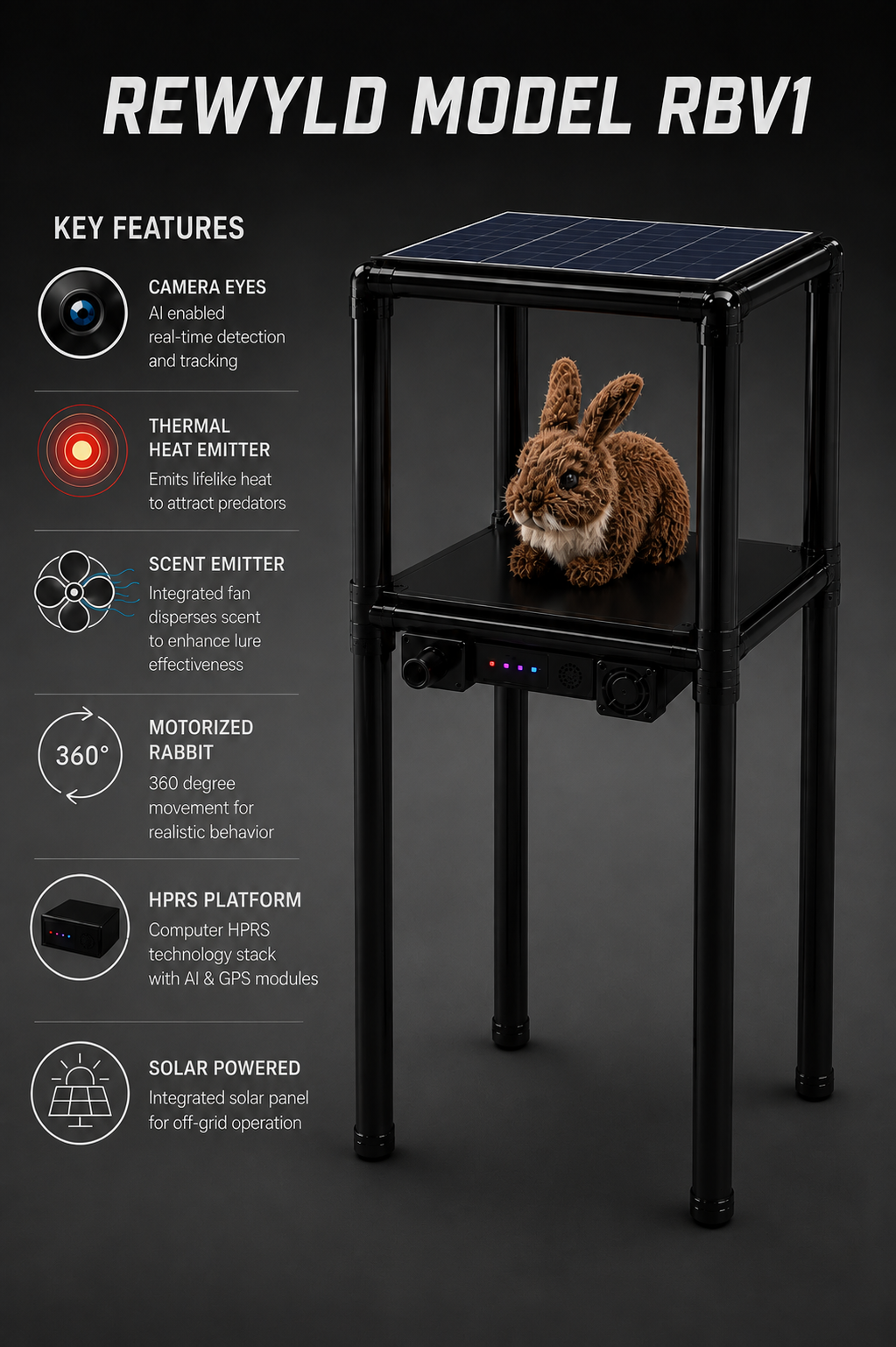
The first application is the Smart Decoy Bunny System, an AI-robotic lure designed to attract, detect, and assist in the removal of invasive Burmese pythons. The concept turns their natural predatory behavior against it: rather than searching enormous areas for hidden pythons, HPRS creates an intelligent target that helps bring the predator to the technology.
Attract
Smart Decoys
AI-powered robotic decoys mimic native prey through movement, heat, scent, and appearance, triggering the natural hunting instincts of invasive predators and drawing them into detectable locations.
Detect
Find What's Hidden
Computer vision, machine learning, and sensor fusion detect and identify invasive species in real time, track their activity, and keep them engaged long enough to enable targeted removal.
Remove
Target The Threat
Autonomous systems and geospatial tracking pinpoint the invasive species' location and send real-time mobile alerts, enabling trained removal teams to respond quickly, precisely, and efficiently.
Predict
Turn Data Into Intelligence
Transforms detection and removal data into predictive intelligence, mapping population hotspots, movement corridors, seasonal patterns, and emerging threats to forecast invasive-species activity and guide future removal strategies.
Technical Specifications
R&D Collaboration
Rewyld entered into a licensing agreement for University of Florida's intellectual property and technical know-how supporting the HPRS platform. The technology is currently being evaluated through UF field research at dedicated research sites in and around the Everglades. These field deployments allow the team to test, validate, and continuously improve the technology under real-world environmental conditions.
To expand beyond seasonal field testing, UF researchers are developing dedicated facilities, with support from Rewyld, for year-round research, engineering, and technology development. This work will advance Project Hopper toward commercial deployment while expanding HPRS research to other invasive predators, including Nile monitors and Argentine tegus—creating a continuous pathway from university research to field validation to commercial deployment.
Remove Pythons. Restore Everglades.
Rewyld’s first mission takes us to the Florida Everglades, where invasive Burmese python predators have devastated native wildlife and disrupted the natural balance of one of America’s most important ecosystems. Working alongside University of Florida researchers, we are applying our technology to develop a scalable new approach to invasive species removal and ecosystem recovery.
An estimated 300,000+ invasive Burmese pythons now inhabit South Florida. With few natural predators and an extraordinary ability to reproduce and spread, they have placed enormous pressure on native wildlife and disrupted entire food webs, contributing to mammal population declines of up to 95% in heavily invaded areas.
Project Hopper
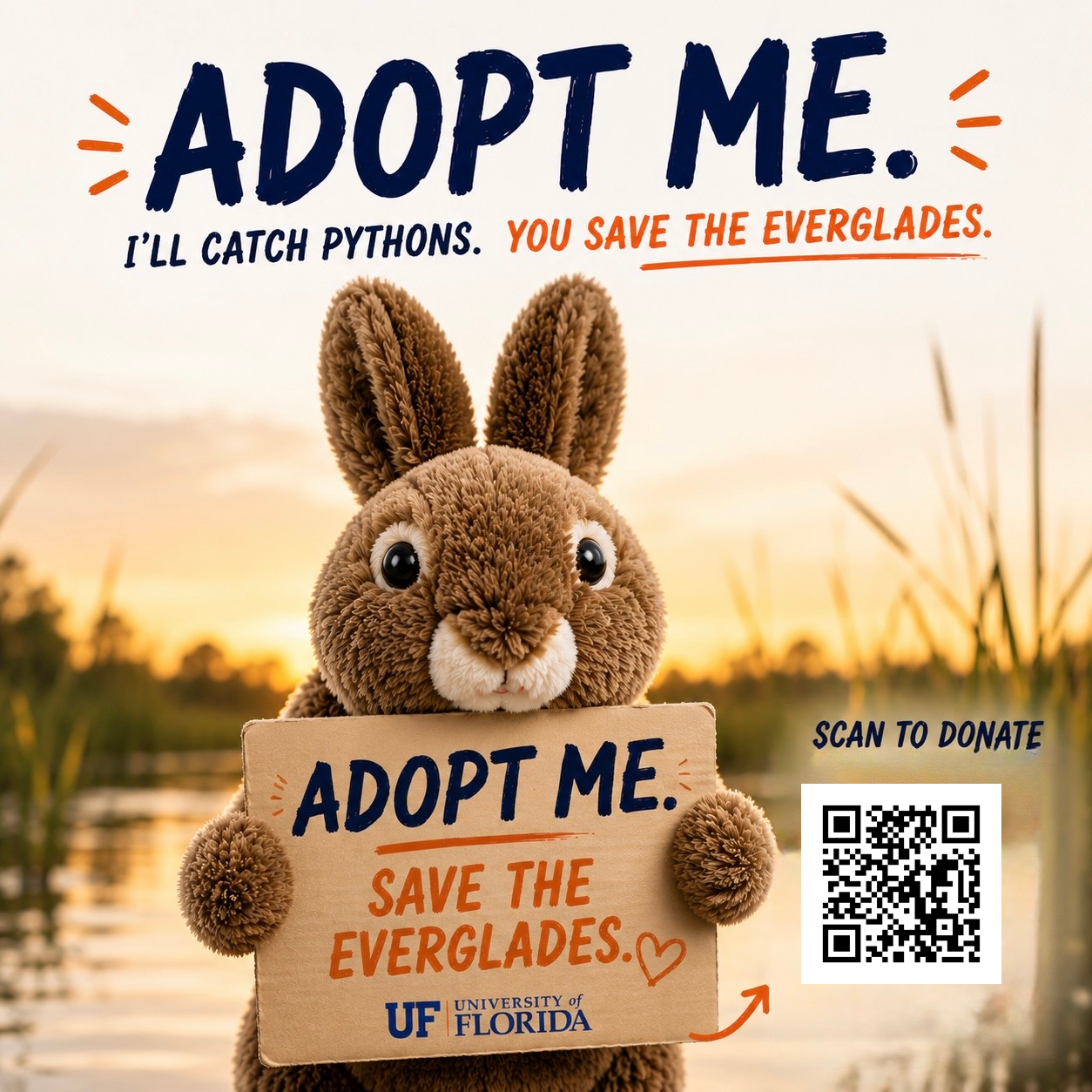
The Rewyld Foundation raises awareness and donations for Project Hopper — UF's Everglades Python Removal Program. 100% of donations go directly to UF Fund 030161, advancing AI and robotics research, prototype development, field testing, and ecological monitoring.
Three Founders. Different Paths. Same Passion.
Jean Paul Desrochers
Co-Founder & CEO
Leads the execution and commercialization of strategic partnerships for Rewyld's conservation technologies, accelerating its path from research and field validation to scalable, real-world deployment.

Robert McCleery
Co-Founder & CTO
Professor of Wildlife Ecology & Conservation at the University of Florida and co-inventor of the underlying technology, providing ecological expertise to guide Rewyld's conservation applications.
Rewyld in the News
Follow our work and see how Rewyld is making headlines in conservation and technology.